
what matters most in Qi2.2 25W wireless charing
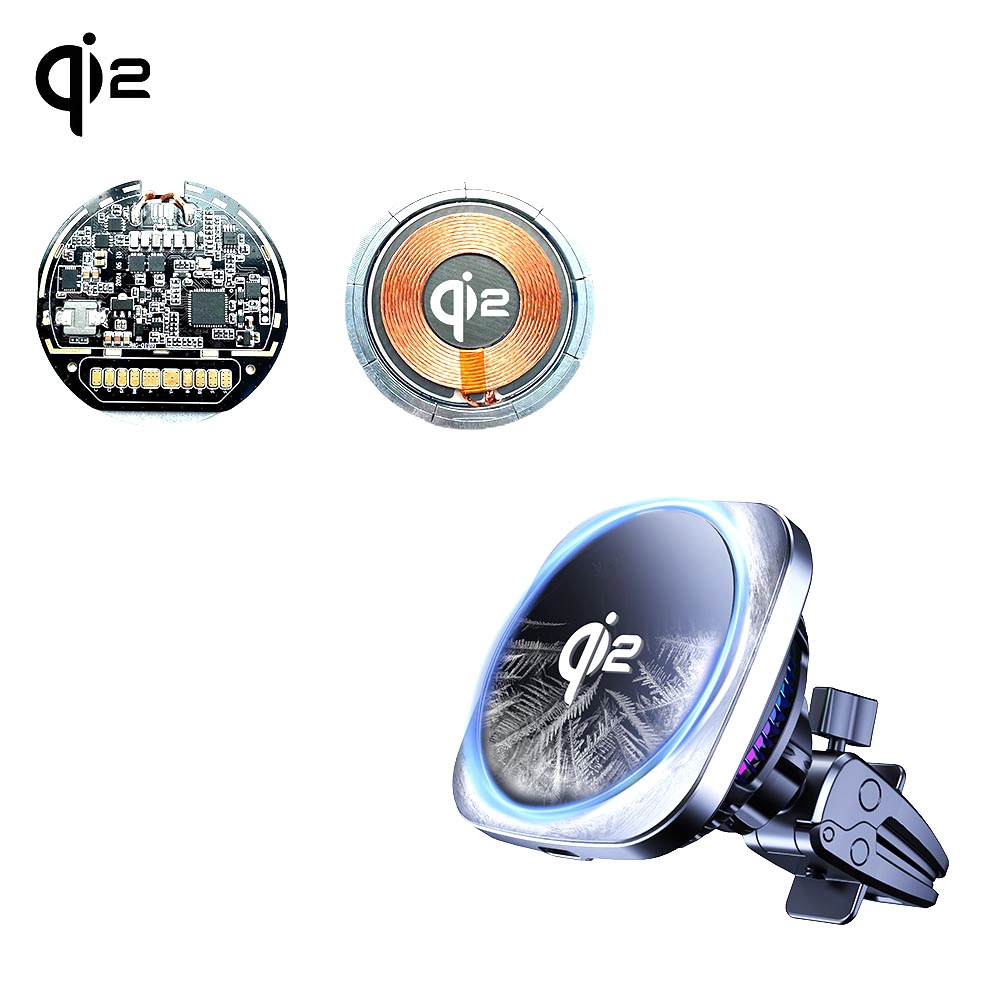
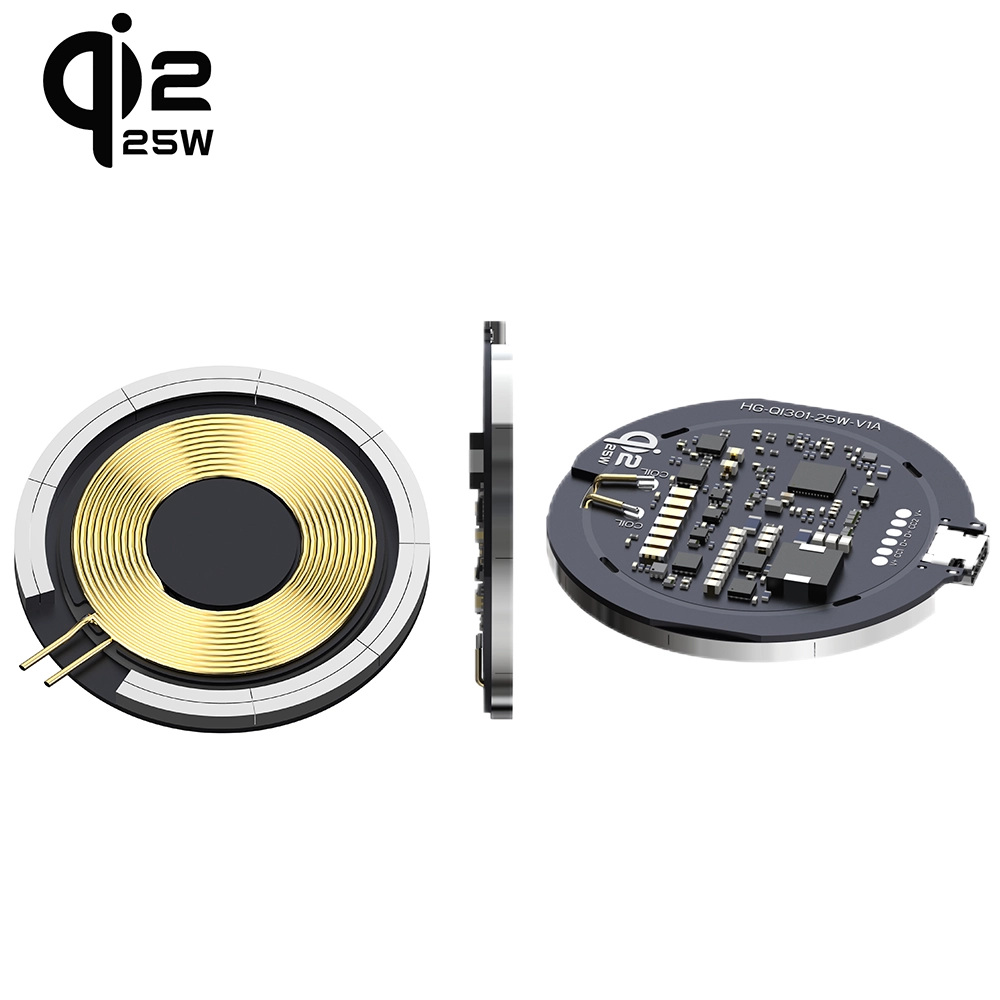
With the launch of CES 2026, Qi2.2 25W wireless charging officially moved into large-scale commercialization. Compared with the previous 15W generation, 25W delivers significantly faster charging speeds. However, the increase in power has also intensified thermal challenges, making heat management one of the most critical issues for the industry to address.
Against this backdrop, active cooling wireless charging technology has rapidly emerged as a key differentiator in premium products and is increasingly viewed as essential for sustaining stable 25W output under Qi2.2.
I. Why Does Qi2.2 25W Generate More Heat?
1️⃣ Increased Coil Coupling Loss
At higher power levels, the thermal loss per unit time becomes significantly greater.
2️⃣ MOSFET and Power Device Heat Accumulation
Under sustained 25W output, transmitter-side MOSFETs, driver ICs, and rectification circuits experience substantial temperature rise.
3️⃣ Smartphone Battery Thermal Limits
Even if the charging pad maintains good thermal control, the phone’s internal Battery Management System (BMS) will limit current once battery temperature reaches safety thresholds.
Therefore, at the 25W stage, simply increasing rated power no longer guarantees performance. The key technical challenge is:
> How to sustain stable 25W output under controlled thermal equilibrium conditions.
II. Active Cooling Solutions Become Mainstream
At CES 2026, active cooling wireless charging was prominently featured as a core innovation.
1️⃣ Fan-Based Active Cooling Systems
Its CryoBoost active cooling system integrates:
* A built-in high-speed silent fan
* Optimized airflow channel design
* Enhanced thermal conduction structures
This configuration enables sustained 25W output while reportedly reducing operating temperature by approximately 5–6°C.
Technical Advantages:
* Relatively controllable cost
* Mature structural design
* Suitable for large-scale production
Technical Challenges:
* Fan noise control
* Long-term reliability
* Increased product thickness
Despite these trade-offs, fan-based active cooling currently represents the most practical and commercially viable solution.
2️⃣ Thermoelectric Cooling (TEC) Solutions
Some manufacturers have adopted thermoelectric cooling (TEC) modules, commonly seen in gaming-oriented magnetic wireless charging accessories.
Technical Principle:
* Utilizes the Peltier effect
* Actively transfers heat away from the smartphone contact surface
Advantages:
* Higher cooling efficiency
* Well-suited for high-load scenarios such as gaming
Limitations:
* Higher power consumption
* Increased cost
* More complex thermal architecture
Currently, TEC-based solutions are mainly positioned in niche premium markets rather than mainstream consumer segments.
3️⃣ Intelligent Thermal Control Algorithms
Beyond hardware, software-level optimization also plays a critical role:
* Multi-stage charging curves
* Dynamic power compensation
* Multi-point NTC temperature monitoring
Some manufacturers adopt a strategy of “25W peak + stable 18–22W sustain,” reducing thermal shock while maintaining overall high charging efficiency.
III. Industry Signals from CES 2026
At CES 2026, active cooling wireless charging was prominently featured as a core innovation.
1️⃣ Fan-Based Active Cooling Systems
Its CryoBoost active cooling system integrates:
* A built-in high-speed silent fan
* Optimized airflow channel design
* Enhanced thermal conduction structures
This configuration enables sustained 25W output while reportedly reducing operating temperature by approximately 5–6°C.
Technical Advantages:
* Relatively controllable cost
* Mature structural design
* Suitable for large-scale production
Technical Challenges:
* Fan noise control
* Long-term reliability
* Increased product thickness
Despite these trade-offs, fan-based active cooling currently represents the most practical and commercially viable solution.
2️⃣ Thermoelectric Cooling (TEC) Solutions
Some manufacturers have adopted thermoelectric cooling (TEC) modules, commonly seen in gaming-oriented magnetic wireless charging accessories.
Technical Principle:
* Utilizes the Peltier effect
* Actively transfers heat away from the smartphone contact surface
Advantages:
* Higher cooling efficiency
* Well-suited for high-load scenarios such as gaming
Limitations:
* Higher power consumption
* Increased cost
* More complex thermal architecture
Currently, TEC-based solutions are mainly positioned in niche premium markets rather than mainstream consumer segments.
3️⃣ Intelligent Thermal Control Algorithms
Beyond hardware, software-level optimization also plays a critical role:
* Multi-stage charging curves
* Dynamic power compensation
* Multi-point NTC temperature monitoring
Some manufacturers adopt a strategy of “25W peak + stable 18–22W sustain,” reducing thermal shock while maintaining overall high charging efficiency.
III. Industry Signals from CES 2026
At CES 2026, the narrative around wireless charging shifted significantly.
Previously, what matters is:“What is the maximum power output?”
Now, what really matters is:“Can it sustain stable 25W output?”
This change signals that the industry has entered the era of thermal management-driven competition.
IV.Implications for the Supply Chain and Module Manufacturers
For wireless charging module suppliers, the Qi2.2 25W era introduces new technical requirements:
1️⃣ Higher-Efficiency Power Architecture
* Lower Rds(on) MOSFETs
* High-frequency drive optimization
* Conversion efficiency exceeding 90%
2️⃣ Integrated Thermal-Structural Design
* Coil and heat spreader integration
* Compatibility between magnetic arrays and heat dissipation paths
3️⃣ Fan Control Circuit Integration
Active cooling systems require:
* Fan driver circuits
* Noise suppression control
* Optimized power allocation design
V. Future Development Directions
Based on current technological evolution, future thermal solutions may include:
* Advanced high-conductivity materials (e.g., graphene composites)
* Miniaturized silent fan systems
* Higher-efficiency coil architectures
* Embedded active cooling systems in desks or furniture
As Qi standards continue to evolve (with Qi3 expected to further increase power levels), active cooling is likely to become a standard feature in premium wireless chargers rather than an optional enhancement.
VI.Conclusion
The commercialization of Qi2.2 25W marks the beginning of the high-power wireless charging era. However, higher power does not automatically translate into better user experience. The true competitive advantage lies in:
> Sustained and stable output under controlled thermal conditions.
The rise of active cooling technology is not merely about solving overheating — it represents a critical step in transforming wireless charging from a “fast-charging feature” into a mature engineering platform.